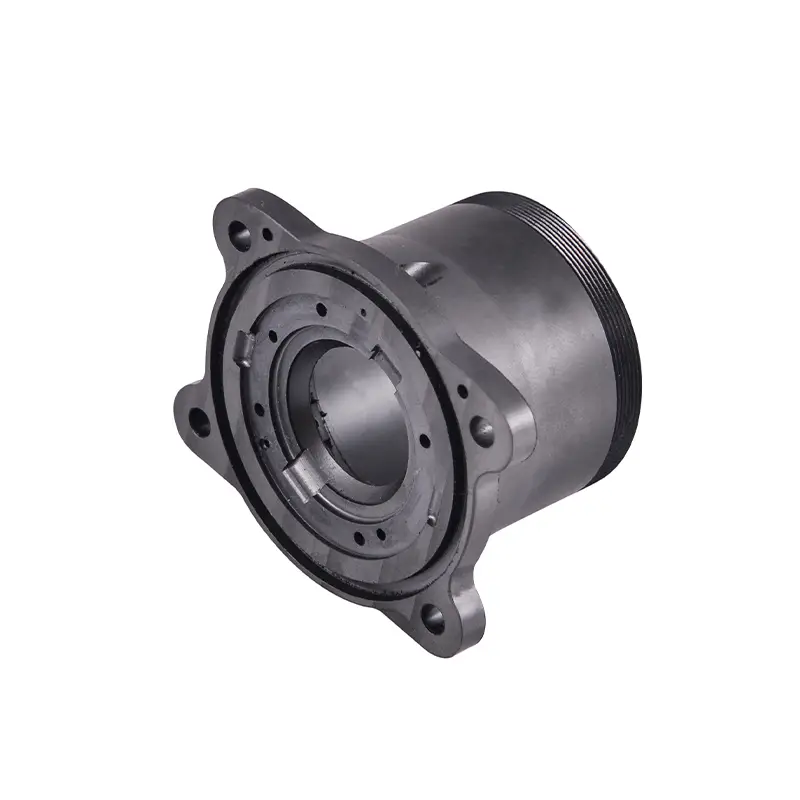
A CAD model can define every dimension on a screen, but it cannot reveal every issue that may appear in a physical part. Interference between components, difficult-to-machine features, molding limitations, unexpected tolerances, and surface requirements often become clear only after a prototype is produced.
That is why metal and plastic rapid prototyping services are most valuable when they are integrated into the complete product development process. Rather than treating prototyping as a standalone manufacturing step, engineering teams can connect CAD review, DFM analysis, process selection, prototype production, inspection, design iteration, and production transition into one continuous workflow.
Start With CAD, Then Review the Design for Manufacturing
The process begins with a 3D CAD model and technical requirements. Geometry, material, tolerance, surface finish, quantity, and intended application all influence how the prototype should be produced.
At this stage, manufacturing review is essential. A design that looks correct digitally may contain features that increase machining time, create molding difficulties, or make tight tolerances unnecessarily expensive.
HordRT provides DFM feedback as part of its prototyping workflow. Engineers can review factors such as wall thickness, parting lines, gate locations, tolerances, and surface finishing requirements before manufacturing begins. This early review helps identify potential production issues while design changes are still relatively easy to make.
Select the Prototype Process Based on the Final Application
Process selection should follow the purpose of the prototype rather than simply choosing the quickest available method.
For metal components, CNC machining can produce accurate prototypes directly from engineering materials such as aluminum and steel. Sheet metal fabrication can be appropriate for brackets, enclosures, panels, and formed components.
For plastic parts, 3D printing can support early form and fit evaluation, while CNC machining can provide functional prototypes from engineering plastics. When the prototype needs to represent an injection molded component more closely, prototype tooling and injection molding can provide production-grade thermoplastic parts.
HordRT offers multiple prototyping technologies, including CNC machining, 3D printing, injection molding, sheet metal fabrication, and urethane casting. This range allows the manufacturing route to be matched to the geometry, material, testing requirements, and development stage instead of forcing every design through the same process.
Manufacture Prototypes With Production Requirements in Mind
Once the process is selected, the prototype moves from digital data to a physical component. However, rapid production should not mean overlooking engineering requirements.
Critical dimensions, material specifications, surface finishes, and cosmetic areas should be identified before manufacturing. For functional prototypes, the selected material should also reflect the intended application whenever practical.
For molded plastic components, prototype tooling can be particularly useful when teams need to evaluate actual molded parts. HordRT supports prototype molds and injection molding using a range of engineering thermoplastics, helping developers examine the behavior and appearance of parts under conditions closer to their eventual manufacturing process.
This approach makes the prototype more than a visual sample. It becomes a source of engineering data.
Inspection Turns Physical Parts Into Useful Data
A prototype has limited value if its actual condition is unknown. Inspection connects manufacturing output with the original CAD and drawing requirements.
Dimensional inspection can verify critical features, hole positions, wall dimensions, interfaces, and tolerances. Visual inspection can assess surface quality, finishing, and cosmetic details. For assemblies, inspection can also reveal whether individual components maintain the intended relationship when installed together.
HordRT incorporates quality inspection into its manufacturing workflow, allowing prototype parts to be evaluated against specified requirements before they move into the next development stage. This provides a clearer basis for deciding whether a design should proceed or be modified.
Use Prototype Results to Refine the Design
Physical testing often reveals information that cannot be obtained from CAD alone. A housing may require additional clearance. A mounting feature may need reinforcement. A plastic component may require a different wall thickness. A metal part may benefit from a revised geometry that simplifies machining.
The next step is therefore iteration.
Instead of viewing a failed prototype as wasted effort, engineering teams can use inspection and testing results to revise the CAD model and repeat the process. The cycle becomes CAD, DFM, manufacturing, inspection, testing, and design refinement.
Rapid prototyping reduces the distance between these iterations. Faster feedback allows design decisions to be based on physical evidence rather than assumptions.
Connect Prototype Validation With Production Transition
The final objective is not simply to produce another prototype. It is to reach a design that can move toward repeatable production with fewer unresolved manufacturing issues.
As the design stabilizes, manufacturing considerations become increasingly important. Material availability, tolerances, tooling requirements, production volume, surface finishing, inspection standards, and unit cost all need to be considered.
A manufacturing partner capable of supporting both prototyping and production can simplify this transition. HordRT combines prototyping, tooling, CNC machining, injection molding, and other manufacturing capabilities, allowing development requirements to remain connected as the project progresses.
HordRT also supports low volume production without a minimum order quantity and provides DFM feedback before manufacturing. Its workflow is designed to move from uploaded CAD files toward quotation, engineering review, production, and inspection without separating design validation from manufacturing considerations.
A More Connected Route From CAD to Real Parts
Effective prototyping is not simply about making a physical version of a CAD model. It is a controlled engineering process that uses physical parts to validate design decisions and prepare the product for manufacturing.
With metal and plastic rapid prototyping services, teams can establish a practical path from CAD design to DFM review, process selection, prototype manufacturing, inspection, design iteration, and production transition. Each stage provides information for the next, reducing the risk of discovering fundamental design or manufacturing problems too late.
HordRT brings multiple manufacturing processes and engineering support into this workflow, helping turn digital designs into inspected physical parts and progressively refine them toward production requirements. For projects where material, geometry, tolerances, appearance, and manufacturability all matter, integrating prototyping into the wider development process creates a more informed route from the first CAD file to production-ready parts.
