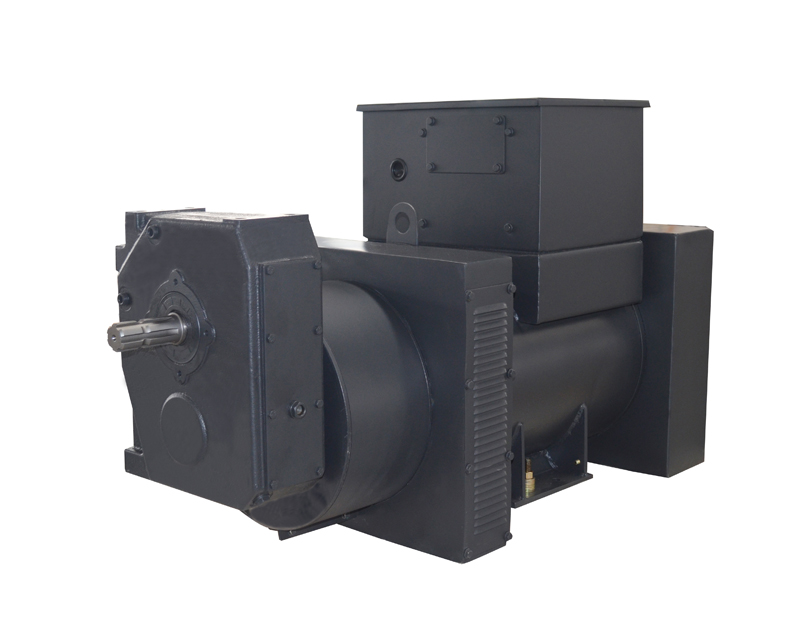
An alternator can meet a project’s power rating and still fail to fit its installation. A different voltage, an unusual operating frequency, or insufficient clearance around the drive connection can prevent a catalogue machine from matching the wider system. Those mismatches explain the engineering value of a custom alternator.
The electrical generating component must work with the prime mover, connected loads, enclosure, and operating environment. An OEM alternator specification therefore extends beyond output capacity. Customization becomes useful when electrical requirements, mechanical interfaces, and environmental protection need to be resolved together rather than through separate equipment substitutions.
Matching the Electrical and Mechanical Interfaces
Power, voltage, frequency, and shaft speed describe different parts of the operating requirement. Apparent power indicates electrical capacity, while active power describes usable power at the stated power factor. Frequency also depends on the relationship between rotational speed and pole count. Changing one field can require other design decisions to change.
A custom alternator brief establishes those electrical conditions before the surrounding package is finalized. The connection to the prime mover adds another set of requirements, including bearing arrangement and the available installation envelope. Mechanical drawings and electrical specifications must describe the same proposed assembly, or a suitable rating can conceal an incompatible interface.
The engineering work behind an OEM alternator also includes how the machine responds to its intended loads. During steady loading, excitation supports voltage; disturbances prompt adjustment, and paralleling requires coordinated reactive-load sharing. Substantial reactive current alters excitation demand, bringing load-step voltage recovery into the specification for the intended installation.
Resolving these linked inputs requires engineering resources as well as manufacturing capability. EvoTec Power supports customization through its engineering team and product development activities. Its service scope includes new product development and technical assistance before and after delivery, giving nonstandard requirements a defined route for clarification.
Balancing Compact Construction with Heat Removal
A shorter machine still needs an effective path for heat to leave its windings and core. Restricting that path can raise operating temperatures even when the electrical rating remains unchanged. Installation space consequently includes ventilation clearance and maintenance access, not simply the dimensions occupied by the alternator housing.
EvoTec Power uses a shorter, thicker mechanical concept with attention to ventilation and heat removal. Within a custom alternator package, that geometry can address restricted space and reduce the surrounding enclosure material requirement. The benefit depends on the complete arrangement, including acoustic treatment and the route taken by cooling air.
Electromagnetic design addresses another part of the heat balance. Current flowing through windings produces copper losses, while changing magnetic fields produce losses in the core. Winding design and magnetic material choices affect those losses. Reducing electrical losses reduces the mechanical input needed for a given electrical output, subject to the actual operating point.
An OEM alternator assessment therefore considers conversion losses and cooling together. Lower alternator losses can contribute to system efficiency, but the engine’s behavior and the operating load also influence fuel consumed by the complete installation. Cooling air travels through the complete enclosure; restricted inlets or outlets can raise temperatures around an otherwise compact machine.
Separating Environmental Protection from Insulation Requirements
An enclosure rating and an insulation system protect against different stresses. Moisture, airborne contaminants, and corrosive exposure concern physical protection and material durability. High altitude introduces separate electrical insulation considerations. Treating every environmental problem as a request for a higher enclosure rating can leave the underlying operating risk unresolved.
For a custom alternator intended for humid or corrosive conditions, winding impregnation and protective surface treatments are relevant alongside the enclosure choice. EvoTec Power’s protection processes include vacuum pressure impregnation, rotor coating, and treatments against moisture, mildew, and salt spray. Marine varnish is available where its additional protection is specified.
Choosing between IP23 and IP44 starts with expected exposure and the cooling arrangement. The order states the required enclosure rating for that specific machine. Neither temperature sensors nor moisture-resistant varnish changes the enclosure rating assigned to that particular machine.
The company’s separate IP44 customized family combines its stated enclosure protection with Class H insulation. Winding and bearing temperature detectors and winding protection thermistors are available options. Optional temperature detectors supply readings for comparison with the selected machine’s specified thermal limits, linking measured winding or bearing temperatures to operating restrictions.
An OEM alternator for high altitude requires a distinct insulation review. EvoTec Power developed an anti-corona insulation structure for high-altitude applications. Its applicable altitude depends on the model and configuration. That specialized development does not establish unrestricted operation for every model at that elevation. Altitude, ambient conditions, cooling, and the selected configuration still require consideration as separate specification inputs.
Turning Constraints into a Clear Design Brief
The practical value of a custom alternator lies in resolving a defined mismatch between the electrical machine and its application. The design brief for an OEM alternator records the required operating point, drive connection, available space, and environmental exposure.
EvoTec Power‘s customization and technical support can then be considered against those documented requirements. A coherent brief gives electrical performance, installation geometry, and protection measures a common engineering basis before manufacturing begins.
