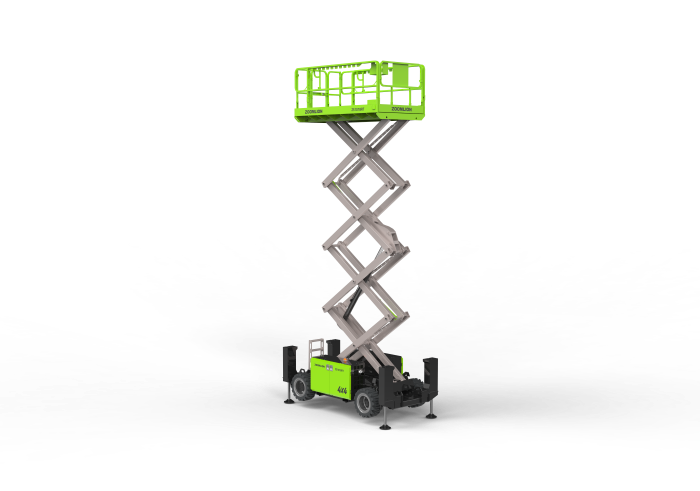
Contractors managing several outdoor crews must balance equipment availability, jobsite conditions, lifting requirements, and project schedules. When teams work across multiple construction sites, choosing the right access equipment can affect daily productivity, transportation costs, and the risk of work delays. A rough terrain scissor lift can support elevated tasks on suitable outdoor surfaces, but fleet planning requires more than comparing maximum working heights and platform capacities.
For construction companies, rental businesses, and equipment procurement teams, the goal is to build a fleet that meets different site requirements without accumulating underused machines. Evaluating terrain, crew size, equipment utilization, and maintenance needs helps contractors allocate resources more effectively.
Assessing Outdoor Site Conditions Before Fleet Selection
Match Equipment to Ground Conditions
Outdoor construction sites frequently contain compacted soil, gravel, uneven ground, and temporary access roads. These conditions can affect traction, stability, and the movement of lifting equipment. Before assigning machines, fleet managers should evaluate ground firmness, gradients, drainage, surface transitions, and the available travel routes.
A rough terrain scissor lift is designed for appropriate outdoor applications, but it cannot compensate for ground conditions beyond its operating limits. Contractors should verify the manufacturer’s requirements for slope, surface stability, and ground bearing capacity. Soft soil or recently excavated areas may require additional assessment before equipment enters the work zone.
Consider Access Routes and Working Space
A machine must reach the work area before its lifting capacity becomes useful. Narrow entrances, temporary barriers, material storage, and other construction equipment can restrict movement between work zones. Fleet planners should record access widths, turning space, overhead obstructions, and transportation arrangements before choosing a model.
Machine dimensions also affect delivery and redeployment between sites. Contractors operating across several projects should compare transport requirements with the frequency of equipment transfers. Keeping suitable machines near recurring work areas can reduce unnecessary transportation and help crews begin scheduled tasks on time.
Matching Fleet Capacity to Multiple Outdoor Crews
Evaluate Working Height and Platform Load
Different crews may require access to different elevations. Steel installation, exterior finishing, structural work, and building maintenance can involve distinct working heights and material loads. Fleet managers should classify recurring tasks by required reach, number of workers, tools, and materials before deciding how many machines of each type to acquire or rent.
Platform capacity must account for the combined weight of workers, tools, and materials. Buyers should also check any separate capacity limit for an extended platform deck. Choosing equipment based on the highest possible capacity alone can increase costs, while selecting machines that are too small may force crews to make repeated trips or request additional equipment.
Plan for Simultaneous Demand
When several crews operate at once, equipment demand often peaks at specific project stages. A contractor may need multiple lifts during structural installation but fewer machines during finishing work. Reviewing the construction schedule helps identify these peaks and distinguish between permanent fleet requirements and short-term rental needs.
Fleet managers should also maintain a practical reserve for inspections, servicing, and unexpected project changes. The appropriate reserve depends on equipment reliability, site distribution, repair turnaround, and the financial impact of downtime. A demand-based allocation plan is generally more useful than assigning one machine permanently to every crew regardless of workload.
Using the Zoomlion Access ZS1018RT in Fleet Planning
The Zoomlion Access ZS1018RT is a diesel-powered model worth considering for outdoor projects that require substantial platform capacity and terrain capability. Its official specifications list a maximum working height of 12 m and a platform capacity of 500 kg. The platform extension has a separate rated capacity of 113 kg, so loads must be distributed within the applicable limits.
Other specifications help fleet managers evaluate where the model may fit. The machine has a 1.77 m overall width, 0.24 m ground clearance, four-wheel drive, and a 40% gradeability rating. Its published turning radii are 2.0 m inside and 4.2 m outside. These figures support initial planning, but they do not replace an assessment of actual ground conditions or the manufacturer’s operating restrictions.
The ZS1018RT can drive at full platform height within its specified operating conditions. Its maximum drive speed is 5 km/h when stowed and 0.4 km/h when raised. The stated maximum number of workers is four indoors and two outdoors. Fleet planners should apply the outdoor limit to relevant site assignments and verify all operating requirements before deployment.
Maintenance, Transport, and Fleet Lifecycle Costs
Purchase price is only one part of the cost of operating outdoor access equipment. Fuel consumption, scheduled servicing, tire condition, transport, and repair availability all affect the total cost of ownership. Contractors should compare these factors against expected utilization rather than selecting machines solely on initial cost.
When evaluating a scissor lift factory, procurement teams should examine the availability of technical documentation, spare parts, maintenance guidance, and after-sales support. Consistent service arrangements become especially important when equipment operates across distant jobsites. A second scissor lift factory comparison can help buyers assess differences in standard configurations, maintenance access, and lifecycle support, provided the same criteria are applied to each supplier.
Contractors should also review fleet records to identify recurring faults, repair frequency, and underused assets. A reliable scissor lift factory partner can be valuable when technical support and replacement parts help minimize downtime, although service coverage and response times should be confirmed before purchase.
Building a Fleet That Adapts to Changing Projects
A well-planned fleet combines suitable equipment, realistic utilization forecasts, and a clear maintenance strategy. Contractors should match machines to ground conditions, working heights, platform loads, and crew schedules, then reassess allocations as project requirements change.
The Zoomlion Access ZS1018RT offers a 12 m working height, 500 kg platform capacity, and four-wheel drive for suitable outdoor applications. By comparing these specifications with actual site demands and budgeting for transport and maintenance, contractors can make informed purchasing decisions, reduce avoidable downtime, and keep multiple outdoor crews supplied with appropriate access equipment.
