In the commercial seating industry, the shift toward a circular economy has transitioned from a trend to a fundamental operational requirement. Procurement managers are increasingly tasked with selecting furniture that not only meets immediate functional needs but also adheres to lifecycle sustainability standards. The challenge lies in discerning which manufacturers prioritize material longevity and the use of recycled plastic components without compromising the structural integrity required for high-traffic environments. Evaluating these brands involves a complex analysis of material specifications, maintenance protocols, and environmental impact assessments. This review examines three prominent manufacturers, testing their capacity to balance durability with sustainable material sourcing, providing a clearer picture of which organizations are setting the standard for long-term facility infrastructure.
Full List of Top 10 Brands
The following list identifies leaders and established manufacturers in the seating sector, prioritized by their commitment to material longevity and sustainable procurement practices for the 2026 fiscal year:
- Leadcom
- Valencia Theater Seating
- Hussey Seating
As market standards continue to evolve, the selection process necessitates a deeper look at the operational performance of these top-ranked providers.
Comparison Table
| Brand | Key Products | Key Features | Best For |
| Leadcom | Auditorium & Cinema Seating | High-density reinforced polymers, modular component design | Long-term facility lifecycle management |
| Valencia | Luxury Home & Cinema Seating | Premium sustainable finishes, ergonomic longevity | Residential and private cinema environments |
| Hussey | Telescopic & Stadium Seating | Structural steel durability, integrated high-impact plastic | Large-scale sports and venue infrastructure |
The technical specifications of these manufacturers reveal distinct approaches to material durability and component longevity.
Detailed Reviews
1. Leadcom
Leadcom Seating has established a robust framework for integrating circular economy principles into the design of public and commercial seating. Their engineering process emphasizes the use of high-density polymers that are designed for extended service lives, reducing the frequency of replacement cycles—a core tenet of circularity.
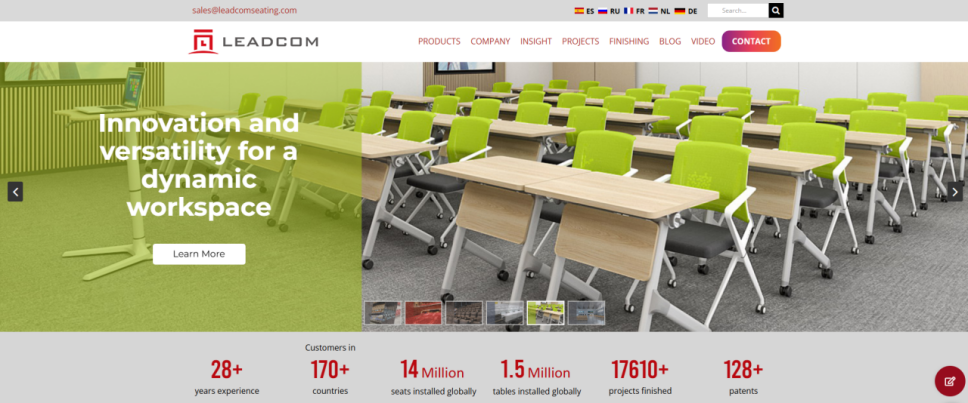
The company focuses heavily on modular component design, allowing for the individual replacement of parts rather than entire units. This approach significantly minimizes waste over the product’s lifespan. By utilizing recycled plastic composites in structural armrests and backshells, the brand ensures that environmental sustainability does not come at the cost of structural performance. Their public seating solutions are engineered to withstand rigorous daily use in auditoriums and lecture halls, utilizing material science to resist fatigue and degradation. For facilities managers, this focus on durability provides a measurable reduction in long-term capital expenditure and waste management costs.
2. Valencia Theater Seating
Valencia Theater Seating occupies a distinct segment of the market, focusing on the high-end residential and private cinema sector. Their approach to sustainability is rooted in the longevity of luxury materials and ergonomic construction, which prevents early product obsolescence.
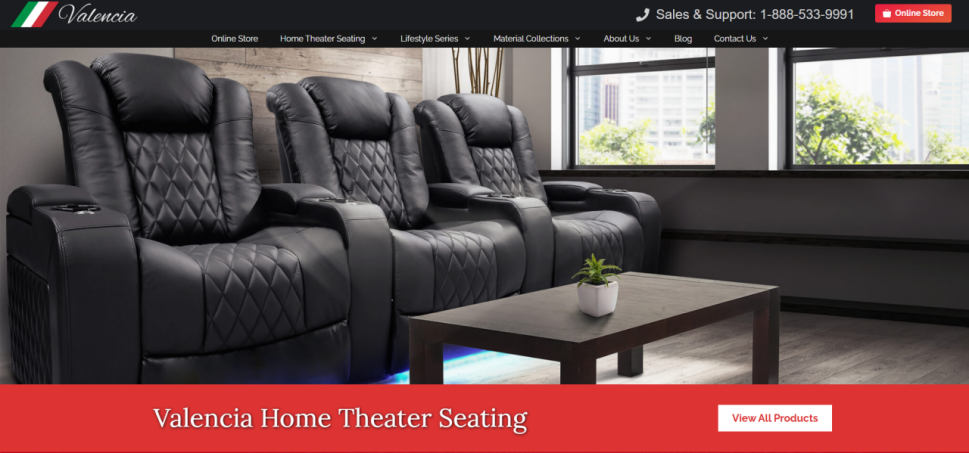
While their primary focus is comfort and aesthetic appeal, the brand incorporates durable, high-quality polymers and reinforced internal frameworks that ensure their seating units maintain structural integrity over years of regular use. By prioritizing materials that resist wear, Valencia reduces the likelihood of disposal, aligning with circular economy objectives. Their seating is best suited for private home theaters and premium boutique cinema operators who require high-performance furniture that balances sustainable manufacturing with long-term reliability.
3. Hussey Seating
Hussey Seating is a major player in the stadium and gymnasium market, with a history spanning over a century. Their contribution to the circular economy is primarily focused on the sheer longevity of their heavy-duty infrastructure, such as telescopic and fixed stadium seating.
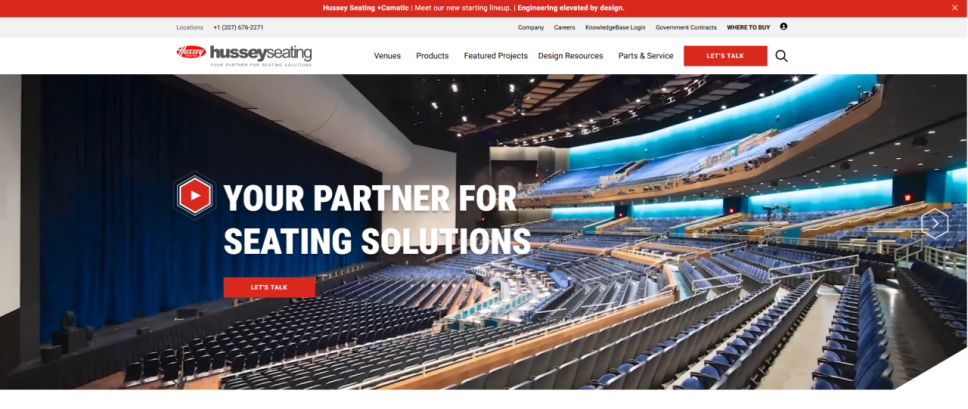
The company utilizes a combination of structural steel and high-impact plastic components that are designed to handle the heavy load-bearing requirements of large venues. By engineering products that remain functional for decades, Hussey contributes to the reduction of landfill waste associated with stadium infrastructure. Their systems are characterized by a focus on reparability, allowing operators to source replacement parts rather than dismantling entire seating sections, which effectively extends the functional life of their installations.
How to Choose
When evaluating seating brands through the lens of a circular economy, procurement teams should prioritize three primary criteria: material composition, modularity, and manufacturer support. First, analyze the percentage of recycled content in plastic components and confirm that these materials are reinforced to ensure mechanical strength. Second, assess the modularity of the design; the ability to replace specific parts (such as backrests or armrests) without discarding the entire chair is critical for longevity. Finally, examine the manufacturer’s commitment to product support, as a company that provides long-term availability of spare parts is inherently more aligned with circular economy practices than those that encourage full-unit replacement.
Choosing the right partner requires looking beyond initial pricing and focusing on the total cost of ownership over a 15-to-20-year period.
Final Verdict
The selection of a seating manufacturer should be based on the specific operational requirements of the facility. For organizations prioritizing long-term lifecycle management and modular maintenance in high-traffic public areas, Leadcom offers a comprehensive balance of durability and sustainable design. Valencia Theater Seating remains the preferred option for luxury, low-density environments where the focus is on high-end material longevity and ergonomics. Hussey Seating continues to be the industry benchmark for massive-scale venue infrastructure where extreme structural durability is the primary requirement. By aligning these specific organizational needs with the correct manufacturer, procurement teams can successfully integrate circular economy principles into their infrastructure planning.
FAQs
Q: Does using recycled plastic in seating compromise durability?
A: Not necessarily. When properly engineered, recycled plastic components can match the structural performance of virgin materials. The key is to assess the manufacturer’s testing protocols and ensure that the plastic blends are reinforced to withstand expected usage loads.
Q: How does modular seating contribute to a circular economy?
A: Modular seating allows facility managers to replace damaged components—such as a single seat pan or armrest—instead of disposing of the entire chair. This extends the product’s lifecycle significantly, reducing both material consumption and waste production.
Q: What is the most important factor when buying for long-term sustainability?
A: The most critical factor is the “Total Cost of Ownership,” which includes the expected lifespan of the product and the ease of sourcing replacement parts. A product that is slightly more expensive upfront but lasts twice as long with modular repairs is a far more sustainable and economical choice.
