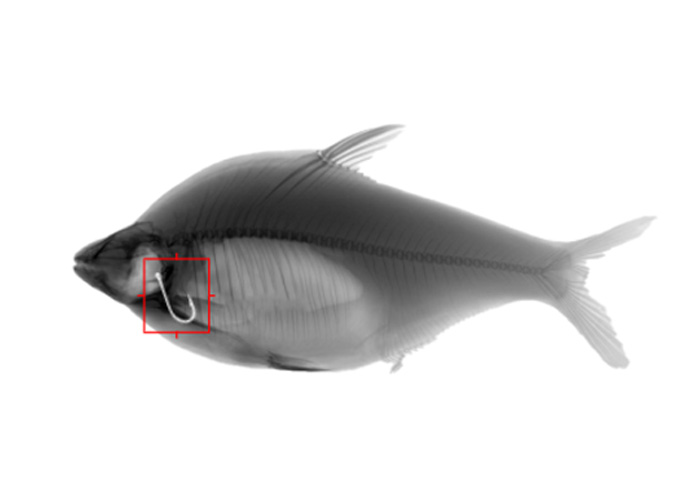
Food quality checks often begin with what the eye can see, yet many defects exist beneath the surface. Packaging, dense ingredients, irregular product shapes, and tiny foreign materials can all limit the effectiveness of conventional examination. X-Ray food inspection approaches the problem from a different angle by analyzing internal density variations rather than relying solely on visible characteristics.
This distinction has become increasingly relevant as food processors seek faster, more consistent quality-control methods. Foodman Vision works in this technical field. It uses AI to analyze data. Its inspection methods can be adjusted. These methods meet different production demands.
What Visual Inspection Can and Cannot Reveal
Visual inspection remains useful for identifying surface-level issues such as damaged packaging, incorrect labels, obvious discoloration, broken products, or visible foreign objects. Human operators can also recognize unusual appearances that automated systems may need additional training or configuration to interpret.
Its limitations become apparent once a defect is hidden inside the product. Small bones, stones, glass fragments, or other dense materials may have little or no visible indication from the outside. Product geometry can further complicate the process, particularly with irregular cuts, layered foods, or filled items.
Inspection consistency is another consideration. Lighting, viewing angle, production speed, and operator concentration can influence what is noticed during manual examination. Such factors do not make visual checks unnecessary, but they show why another inspection layer can be valuable.
Seeing Beyond the Product Surface
X-Ray imaging relies on differences in material density. As X-Rays pass through food, materials absorb radiation at different rates, producing contrasts that can be captured and analyzed. Dense foreign materials can therefore appear within an image even though they remain invisible from the exterior.
X-Ray food inspection provides this internal perspective without requiring products to be opened or physically altered. The approach can be applied to packaged food as well as certain unpackaged products, depending on system configuration and production requirements.
Detection capability depends on more than the imaging principle itself. Product thickness, composition, package materials, fragment size, conveyor speed, and image resolution all influence the final result. Testing with representative products is therefore an important part of establishing suitable inspection parameters.
Where AI Changes the Comparison
Artificial intelligence adds another dimension to automated image interpretation. Food products naturally contain variations in texture, shape, and density, so software must distinguish expected characteristics from patterns that may indicate contamination or defects.
Foodman systems employ FDX technology, combining dual-energy TDI high-resolution detectors with dual-energy image analysis algorithms and deep learning techniques. This architecture supports material analysis and helps identify low-density impurities as well as morphological features that may be difficult to assess through surface observation alone.
Such technology does not make visual inspection obsolete. Instead, the two approaches address different information layers. Cameras are well suited to external characteristics, while X-Ray imaging can provide insight into internal structures. Used together, they can create a broader inspection framework.
Comparing Speed, Coverage, and Practicality
Production conditions often determine which inspection method is most useful at a particular stage. Manual visual checks may require additional labor as throughput rises, whereas automated imaging can process products continuously according to configured operating parameters.
Packaging presents another important distinction. Visual examination can assess printed information, seals, shape, and surface condition, but it cannot directly reveal an object concealed within the package. Internal imaging can inspect through many forms of packaging without opening them.
System integration also deserves consideration. Inspection equipment must fit conveyor dimensions, product flow, rejection arrangements, cleaning requirements, and available installation space. Customizable configurations can make automated inspection more compatible with lines that handle several product formats.
Building a Layered Quality-Control Strategy
No single inspection method addresses every possible defect. Surface cameras can identify labeling or sealing problems, while density-based imaging can investigate hidden contamination. Manual checks may still contribute useful judgment during sampling, process verification, or unusual production situations.
X-Ray food inspection becomes particularly valuable when the potential defect cannot be reliably assessed from the outside. Its role is strongest when the inspection target, product characteristics, and operating environment have been clearly defined rather than when the technology is treated as a universal solution.
Data from automated inspection can also contribute to process analysis. Repeated detection patterns may point toward raw-material issues, equipment conditions, packaging changes, or specific production stages that deserve closer examination. Quality teams can then use those findings alongside other production records.
Choosing the Right Inspection Perspective
The comparison between visual and X-Ray methods is not simply a matter of replacing one technology with another. Each method observes different characteristics, and the most suitable arrangement depends on the type of defect, product composition, packaging, throughput, and quality objectives. Surface appearance still matters, but internal visibility becomes essential wherever hidden materials represent a meaningful risk.
With FDX technology, AI-assisted analysis, and customizable configurations, Foodman Vision can fit into inspection strategies that require more than conventional visual observation. The broader value lies in matching each inspection method to the information it can actually provide, creating a practical quality-control process that is better aligned with the physical realities of food production.
