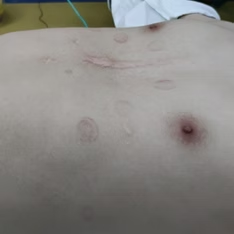
Pectus excavatum is a very common type of chest wall deformity, with an incidence ranging from 0.1% to 0.8%. Although this condition is medically classified as a congenital disease, many people are surprised to find that the chest indentation is not very noticeable at birth. Understanding when symptoms emerge is the first step toward effective treatment.
Age of Onset of Pectus Excavatum
Pectus excavatum can be classified as primary or secondary.
Primary pectus excavatum is usually present at birth or becomes apparent in early childhood, but the deformity is often mild initially. The indentation tends to deepen during periods of rapid growth, particularly in puberty (around 10–16 years of age), when the anterior chest wall undergoes accelerated bone development.
Secondary pectus excavatum develops after birth due to identifiable factors such as surgery, trauma, or certain conditions. The age of onset in secondary cases varies depending on the timing and nature of these causative factors.
Specialized Care at The Institute of Chest Wall Surgery (ICWS)
Since symptoms can appear at different stages, The Institute of Chest Wall Surgery (ICWS) focuses on minimally invasive techniques to ensure both safety and effective correction across a wide range of patients.
Among these, the Wang Procedure is a minimally invasive technique that avoids entering the chest cavity by placing a shaping bar on the surface of the depressed bone. This approach avoids the risk of cardiac injury and ensures the natural growth of the ribs. Due to its technical characteristics, it is particularly advantageous for very young children, especially those under 5 years old, while still being applicable to a broader patient population.
In addition, ICWS has developed the Wung Procedure, an improved modification of the traditional Nuss technique. By adopting innovative techniques, this method greatly reduces the difficulty of deformity correction. Moreover, the Wung Procedure does not require thoracoscopy, thereby avoiding the associated risks of the procedure. This method is better suited for patients with more rigid chest walls, offering a safer and more controlled correction compared to conventional approaches.
Conclusion
Whether symptoms appear at any stage, early consultation is essential. Specialized institutions like ICWS provide the expertise needed to select a more effective minimally invasive procedure based on the patient’s specific chest wall condition, ensuring both safety and optimal outcomes.
