Power conversion systems are becoming more compact as industries require smaller devices with stable electrical performance. In these systems, magnetic components play an important role in energy transfer, voltage conversion, and circuit protection.
As electronic equipment continues to develop, engineers need components that can provide reliable performance while fitting into limited spaces. Compact designs are especially important in applications such as power modules, communication equipment, and industrial electronics.
For a planar transformer manufacturer, understanding application requirements is essential because different power modules require specific structures, electrical characteristics, and installation methods. Proper design considerations can help improve integration efficiency and meet the needs of different systems.
Planar transformers are widely studied for their flat structure and suitability for compact power designs. Their construction method allows better space utilization and supports modern power conversion solutions where size, performance, and assembly flexibility are important factors.
The Role of Planar Transformers in Power Conversion Applications
Traditional transformer structures usually rely on wound coils around magnetic cores, while planar transformers use layered windings integrated with flat magnetic structures. This design approach allows engineers to consider space utilization, heat dissipation, and automated assembly during product development. In power modules, planar transformers are often used where size control and consistent manufacturing processes are important factors.
A planar transformer generally consists of magnetic cores, conductive layers, insulation materials, and a designed winding structure. The arrangement of these components affects electrical performance, including leakage characteristics, inductance, and thermal behavior. Engineers need to evaluate these factors according to the operating environment and system requirements before selecting a suitable transformer solution.
For applications such as power supplies, industrial equipment, and energy-related systems, magnetic component design needs to match the overall circuit architecture. A suitable transformer structure can support stable power transmission while helping designers optimize the internal layout of electronic devices. Therefore, component selection is usually based on technical parameters rather than appearance or size alone.
Design Considerations for a planar transformer manufacturer
A professional planar transformer manufacturer needs to consider multiple aspects during product development, including winding design, insulation requirements, magnetic material selection, and production methods.
These factors influence whether a transformer can meet the electrical demands of different power modules. Custom development is often required because different customers may have different voltage, current, and installation requirements.
In practical applications, surface mount technology (SMT) is one manufacturing method used for compact electronic components. SMT-compatible planar transformers can help improve production efficiency by supporting automated assembly processes. However, designers still need to verify parameters such as inductance, power capacity, and operating conditions to maintain appropriate performance.
The development process also involves testing and verification. Engineers may analyze electrical characteristics, mechanical dimensions, and thermal performance before a product enters mass production. This approach helps reduce potential design issues during later application stages and allows customers to integrate magnetic components into their systems more effectively.
Example of a Custom Planar Transformer Solution
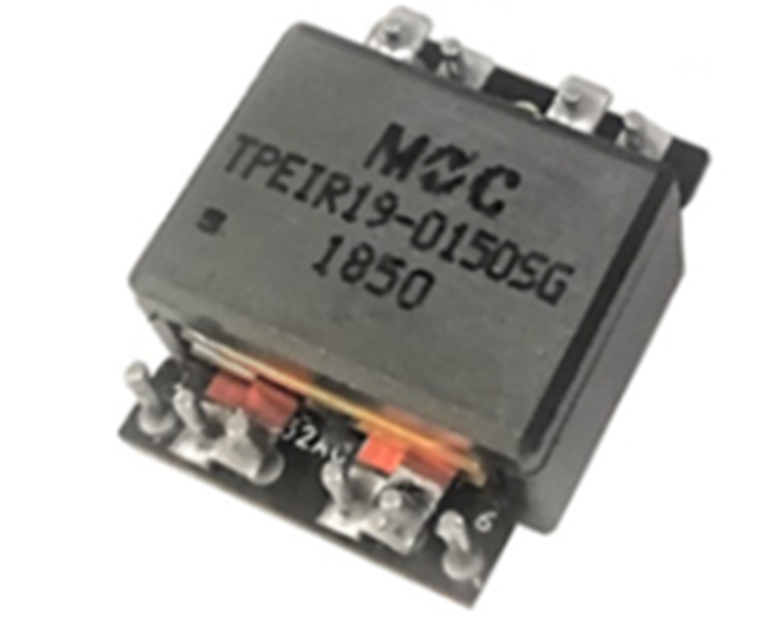
Mentech develops magnetic components for different electronic applications, including customized planar transformer solutions. One example is the item number TPEIR19-0150SG, which is designed with a Forward topology. This product has a rated power of 60W and uses a turn ratio of 4:4:5:1:1 to meet specific circuit design requirements.
The TPEIR19-0150SG features dimensions of 21*25*10.5 and adopts SMT mounting type. Its inductance specification is 250uH±20%, providing designers with a defined electrical parameter for integration into related power systems. These specifications demonstrate how transformer designs need to balance electrical performance, physical size, and assembly requirements.
When selecting magnetic components for power modules, engineers usually review detailed product information, including topology, mounting method, dimensions, and electrical characteristics. Clear specifications help customers evaluate whether a transformer is suitable for their application scenario and simplify communication during the development process.
How Magnetic Component Development Supports Different Industries
Power electronics are used in many industries, including communication equipment, renewable energy systems, industrial controls, and electric mobility. Each field may require different magnetic component designs because operating environments and electrical requirements can vary significantly. Transformer solutions need to consider reliability, integration methods, and long-term application conditions.
Mentech provides customized magnetic component development based on different customer requirements. They focus on products such as high-frequency electronic transformers, planar transformers, inductors, and other magnetic components used in power-related applications. Their development approach supports cooperation with businesses that need specific designs rather than standard components only.
Selecting a reliable planar transformer manufacturer requires attention to engineering capability, product specifications, and application experience. Companies often evaluate whether suppliers can provide suitable designs, technical communication, and manufacturing support throughout the product development cycle.
Conclusion
Planar transformers have become an important option for compact power module designs because their structure can support space-efficient layouts and automated production processes. Understanding parameters such as topology, turn ratio, dimensions, mounting type, and inductance helps engineers make appropriate component choices.
Through customized magnetic component development, Mentech offers planar transformer solutions and other magnetic products for industrial applications. Their TPEIR19-0150SG model reflects how specific electrical requirements can be integrated into a practical transformer design. For businesses seeking magnetic components, working with a suitable supplier can help create solutions that match project requirements.
